
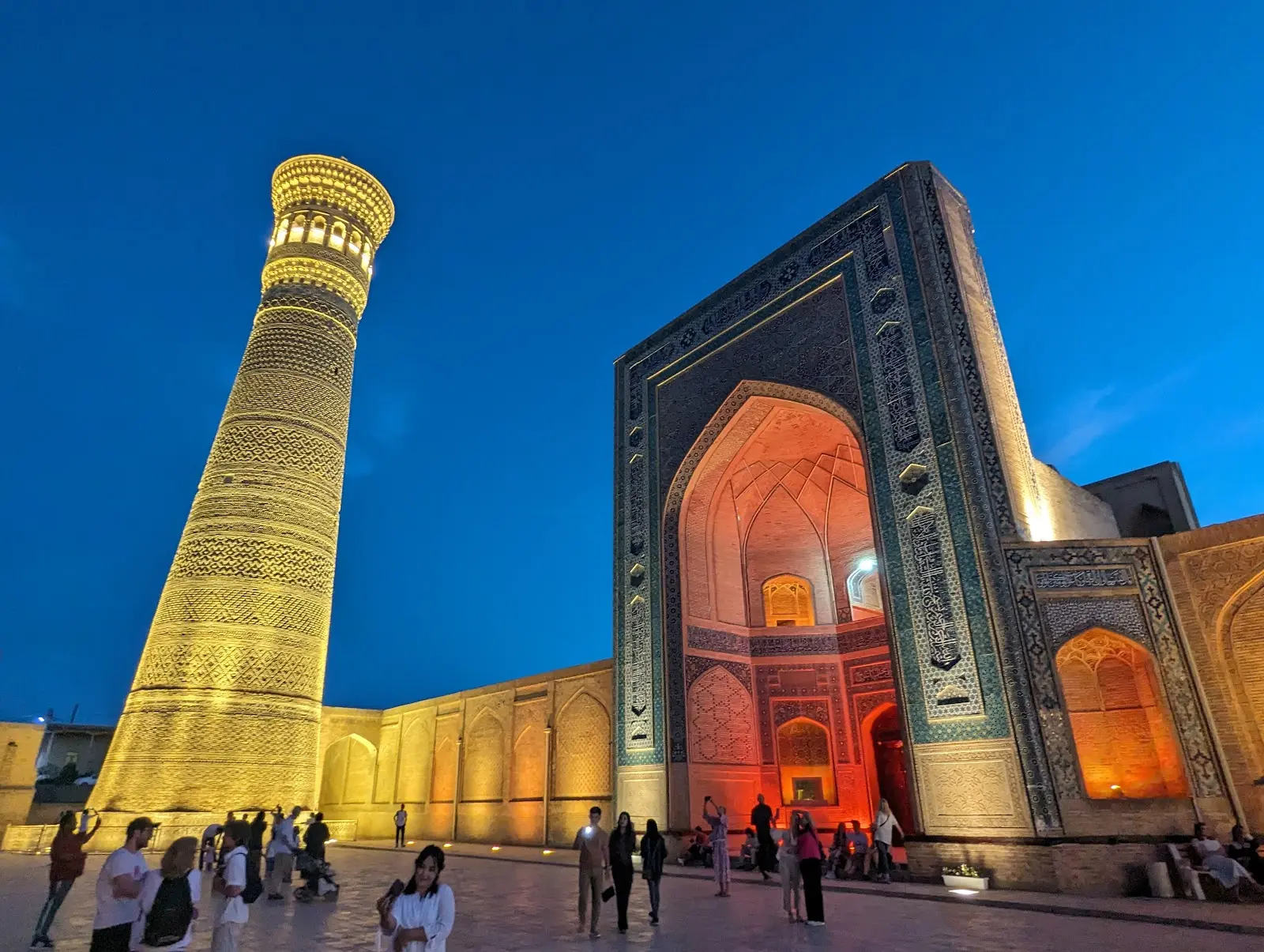
 The Spiritual City
Poi-Kalyan Complex
The defining architectural symbol of Bukhara: the towering 48-meter Kalyan Minaret, the monumental Friday Mosque, and the active Mir-i-Arab Madrasa framing an awe-inspiring stone plaza.
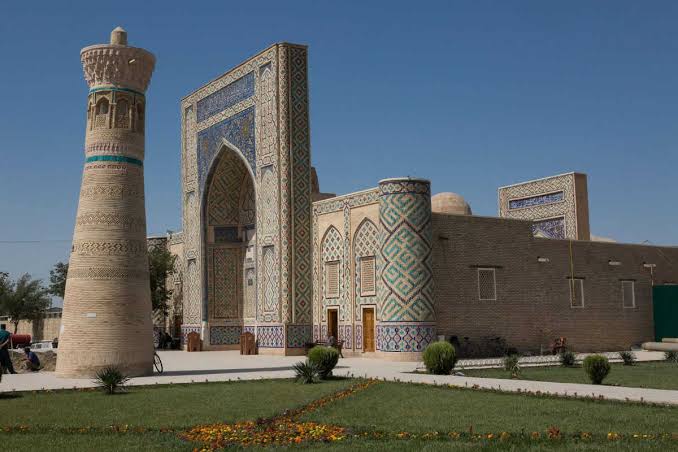
The 12th-Century Guardian of the Silk Road
A soaring 39-meter baked-brick minaret rising above the oasis town of Vabkent, standing virtually unchanged since 1198 CE as a triumph of pre-Mongol engineering.
Vabkent town
Historic Minaret
1196 – 1198 CE
Sadr Burhan al-Din Abd al-Aziz II (Karakhanid Governor)
Call-to-prayer tower
45 minutes
Vabkent Minaret is one of the grandest and best-preserved pre-Mongol minarets in Central Asia. Modeled closely after the Kalyan Minaret in Bukhara, it rises gracefully in a tapered cylindrical brick shaft topped by a ten-arched lantern balcony.
Constructed between 1196 and 1198 CE under the Karakhanid dynasty, just twenty-two years before the devastating invasion of Genghis Khan.
Commissioned by the Burhanid governor of Bukhara to mark the important trading town of Vabkent and provide a defensive and spiritual landmark along the caravan route toward Samarkand.
A sacred minaret for the now-vanished Friday mosque, a defensive watchtower monitoring caravan approaches, and a navigational beacon whose light guided nighttime desert travelers.
An engaging chronological story of how this monument survived invasions, earthquakes, and civilizational shifts.
Because Vabkent was slightly removed from the direct siege assaults on Bukhara’s citadel, the minaret survived the Mongol whirlwind untouched. An elegant Kufic inscription winding around its lower belt preserves the exact year of completion and the name of the architect.
What to observe when standing before this monument or workshop.
Standing 38.7 meters high, the shaft is decorated with ten horizontal bands of relief brickwork, each featuring unique geometric diamond and meander patterns. The lower inscription is carved in ornamental Kufic calligraphy, while the upper band is rendered in fluid Naskh script.
Sensory activities specifically relevant to this site.
Capture the slender, soaring profile of the minaret against the vast blue desert sky.
Examine the turquoise glazed date band — one of the earliest appearances of colored glaze in Central Asia.
A perfect cultural stop en route between Bukhara and the ceramic workshops of Gijduvan.
The historical, spiritual, or trade insights that deepen your understanding of Central Asia.
How 12th-century builders experimented with the very first glazed inscription tiles, pioneering the blue-dome revolution.
Understanding that Silk Road cities were surrounded by chains of satellite market towns linked by canals and watchtowers.
Teahouses, spice shops, artisan stalls, and quiet courtyards in the surrounding mahallas.
Vabkent is famous for its sweet white melons and flat breads. Stop at local fruit stands along the Samarkand-Bukhara highway.
Explore other regional landmarks that share historical or geographic connections with this site.
The Spiritual CityThe defining architectural symbol of Bukhara: the towering 48-meter Kalyan Minaret, the monumental Friday Mosque, and the active Mir-i-Arab Madrasa framing an awe-inspiring stone plaza.
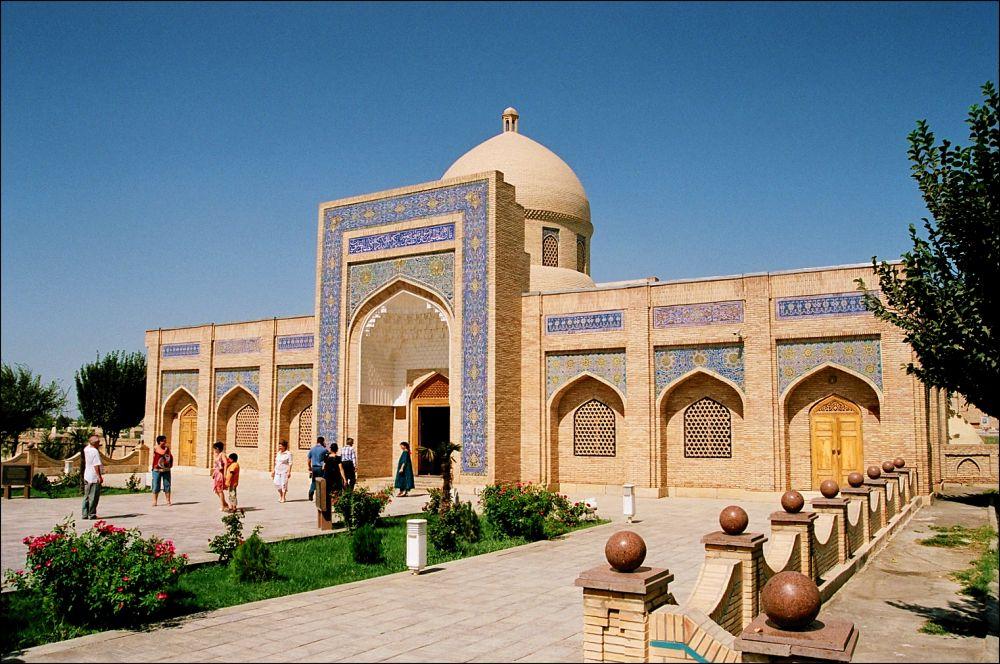
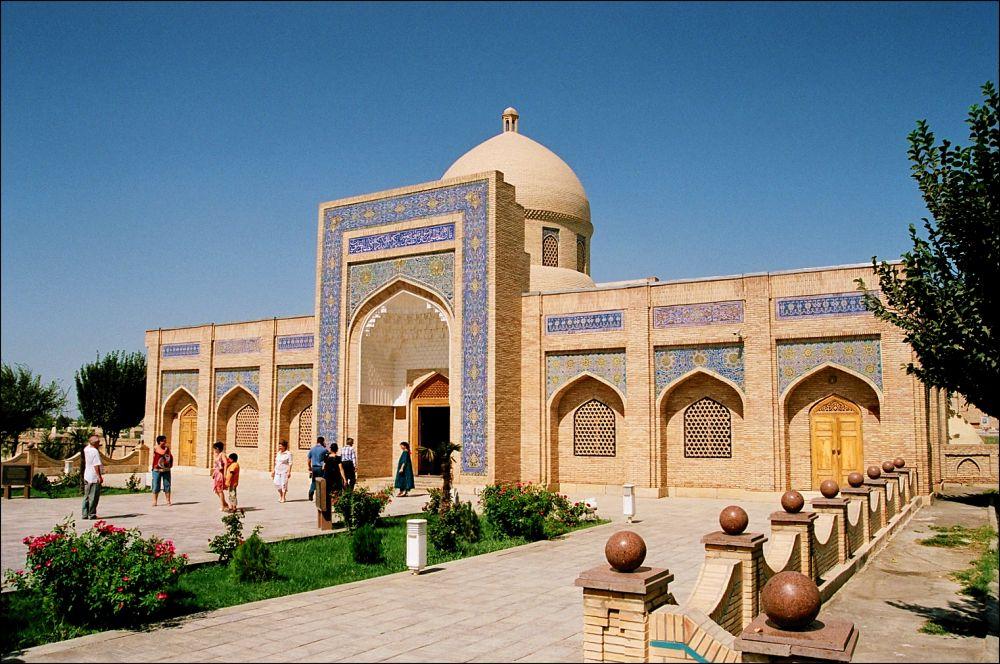 The Spiritual City
A serene and revered pilgrimage sanctuary dedicated to the founder of the Naqshbandi Sufi order, surrounded by sacred gardens and holy mulberry trees.
 The City of Crafts
A historic artisan town 45 km north of Bukhara, world-famous for its distinct, warm golden-brown and green glazed pottery crafted by six generations of the Narzullaev master family.
Looking for something beyond this monument? Discover a completely different historical, merchant, or craft dimension.
The defining architectural symbol of Bukhara: the towering 48-meter Kalyan Minaret, the monumental Friday Mosque, and the active Mir-i-Arab Madrasa framing an awe-inspiring stone plaza.
A massive 5th-century fortress rising like an earthen mountain in the center of Bukhara, from which the rulers of the Emirate governed their desert empire.
.jpg)
Include this historic landmark in a private or small-group journey connecting ancient Silk Road trading cities with Nuratau Mountain homestays.