
 Historic City & Walls
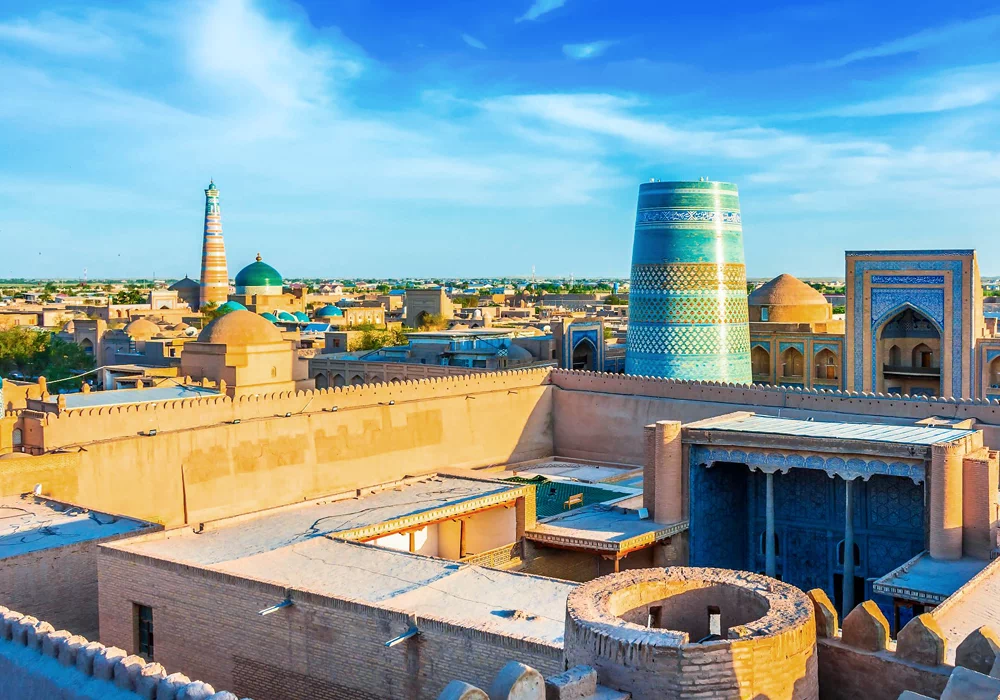
Ichan-Kala (The Historic Walled City)
A completely intact medieval Silk Road city surrounded by two kilometers of undulating mud-brick walls, preserving over fifty historic monuments within a living pedestrian realm.
The Citadel of the Khiva Khans
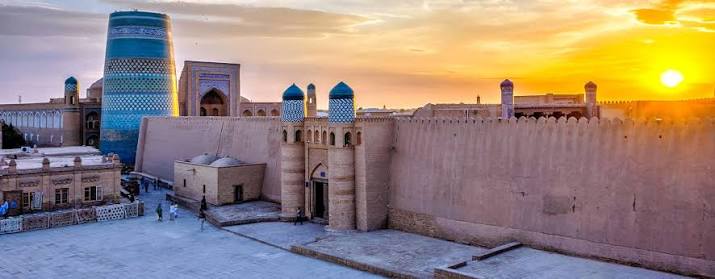
A fortified royal fortress-citadel within Ichan-Kala, housing the Khan's summer reception hall, mint, throne room, and the famous Ak-Sheikh Bobo watchtower.
Western wall of Ichan-Kala
Royal Citadel
1686 – 1806 CE
Arang Khan & later Khivan Khans
Residence of the Khan
1.5 – 2 hours
Kunya-Ark (meaning 'Old Citadel') is a self-contained fortress inside Ichan-Kala. It served as the fortified residence of the Khans of Khiva from the late 17th century until 1920. Behind its heavy defensive walls lie an open-air throne room, royal mint, armory, harem quarters, and an ancient observation bastion.
First established in 1686–1688 by Arang Khan as an autonomous fortified redoubt. It was significantly expanded in the early 19th century by Iltuzar Khan and Muhammad Rahim Khan I.
Built by the Khans to safeguard the royal dynasty against palace rebellions and enemy sieges, providing a secure, impenetrable compound for royal governance.
The executive hub of the Khanate: it contained the official coronation throne court (Kurnish-khana), the royal mint that struck silver and gold tangas, an arsenal, state stables, and residential quarters.
An engaging narrative detailing how this monument evolved across Khorezm's golden ages, desert trade conflicts, and modern preservation.
Within the Kurnish-khana reception hall, foreign emissaries were granted audience with the Khan, who sat upon a lavishly decorated silver throne (now preserved in the Hermitage Museum). In the center of the paved courtyard, a circular stone platform once held the Khan's royal yurt used for private councils.
Features you can see with your own eyes: carved elm columns, majolica friezes, adobe brick bonds, and acoustic domes.
The highlight is the Summer Mosque: an open-air pillared pavilion with walls completely smothered in blue, white, and emerald majolica tiles created by master ceramicist Abdullah Jin. Perched above the fortress stands the Ak-Sheikh Bobo watchtower, Khiva’s premier panoramic sunset viewpoint.
Carefully selected activities genuinely relevant to this monument or quarter.
Ascend the steep mud stairs to the highest lookout for the ultimate sunset panorama over Ichan-Kala.
Inspect intricate ceramic wall patterns combining spiraling vines and Arabic calligraphy.
View original hand-stamped silver coins, paper bank notes, and silk money printed in Khiva.
Core educational takeaways that bring Khiva's Silk Road legacy into sharp perspective.
How royal etiquette, justice, and diplomacy were orchestrated in Central Asian monarchies.
The tactical design of defensive battlements, blind arrow slits, and labyrinthine gates.
Courtyard teahouses, woodcarving studios, and quiet residential lanes right around this site.
Right outside the citadel gate lies the open plaza where local folk musicians perform on the long-necked dutar under shade umbrellas.
Explore other walled landmarks and quarters connected with this site's history or walking circuit.
Historic City & WallsA completely intact medieval Silk Road city surrounded by two kilometers of undulating mud-brick walls, preserving over fifty historic monuments within a living pedestrian realm.
 Historic City & Walls
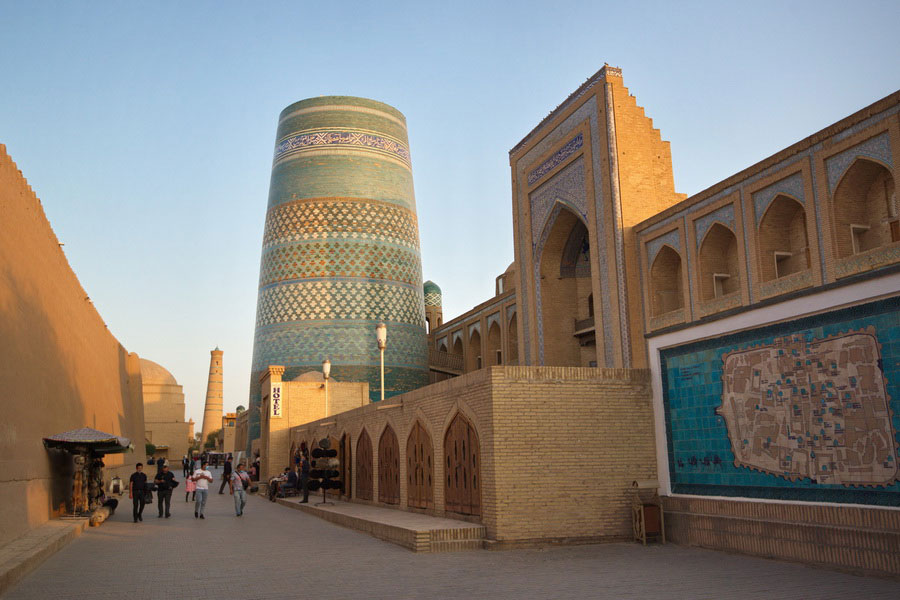
Khiva’s most iconic and photogenic landmark: a colossal, truncated minaret completely wrapped in gleaming azure, turquoise, and white ceramic tilework.
 Sacred Mosques & Shrines
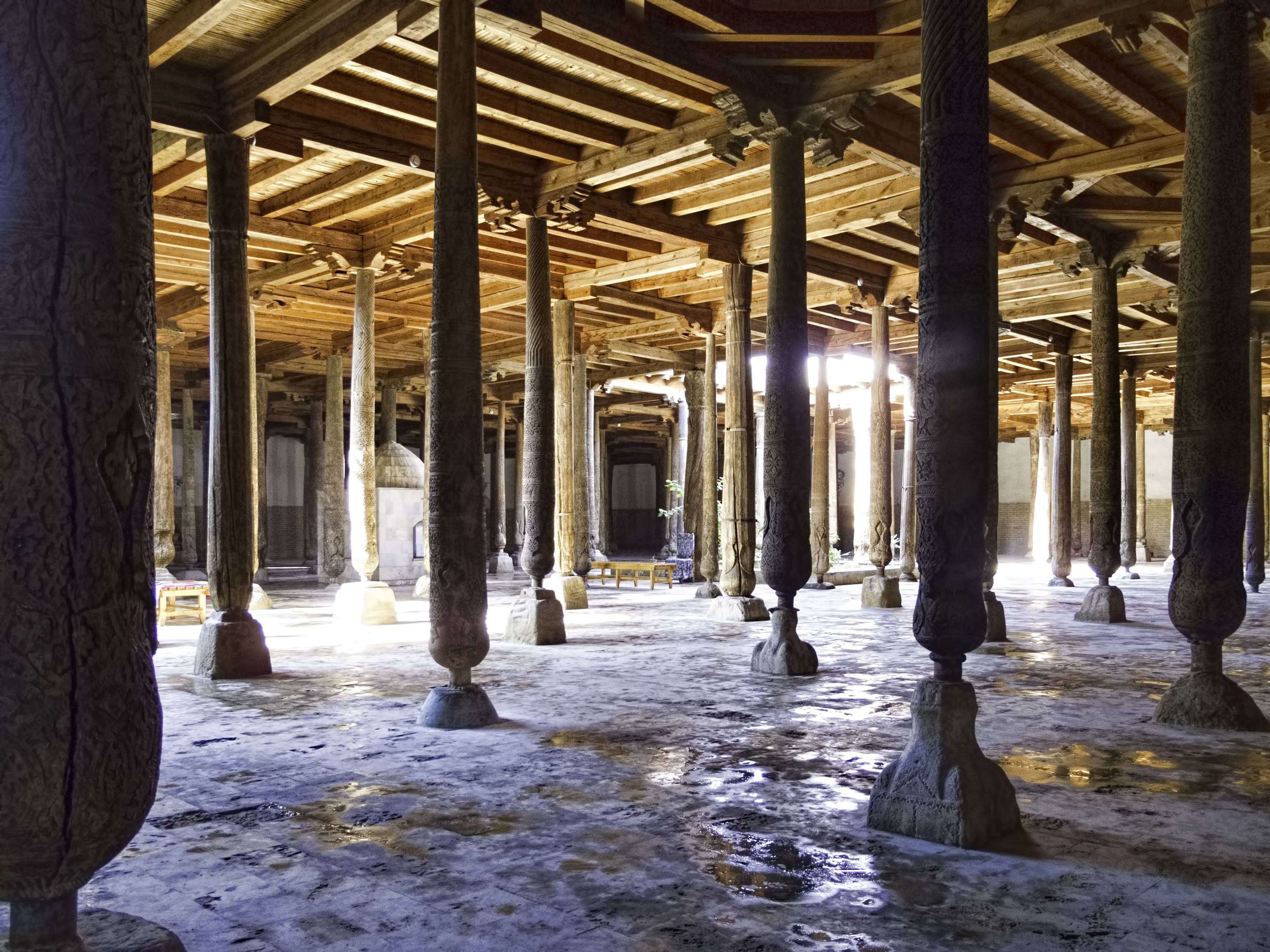
One of the most atmospheric religious spaces in Central Asia: an unadorned single-story hall supported by 218 uniquely carved antique wooden columns dating from the 10th to 18th centuries.
Looking for something beyond this monument? Discover royal fortresses, sacred woodcarvings, or Silk Road bazaar alleys.
A completely intact medieval Silk Road city surrounded by two kilometers of undulating mud-brick walls, preserving over fifty historic monuments within a living pedestrian realm.
Khiva’s most iconic and photogenic landmark: a colossal, truncated minaret completely wrapped in gleaming azure, turquoise, and white ceramic tilework.
.jpg)
Experience Ichan-Kala, royal desert palaces, and ancient Silk Road trading chambers with expert Khorezm cultural guides and seamless logistics.