
 Historic City & Walls
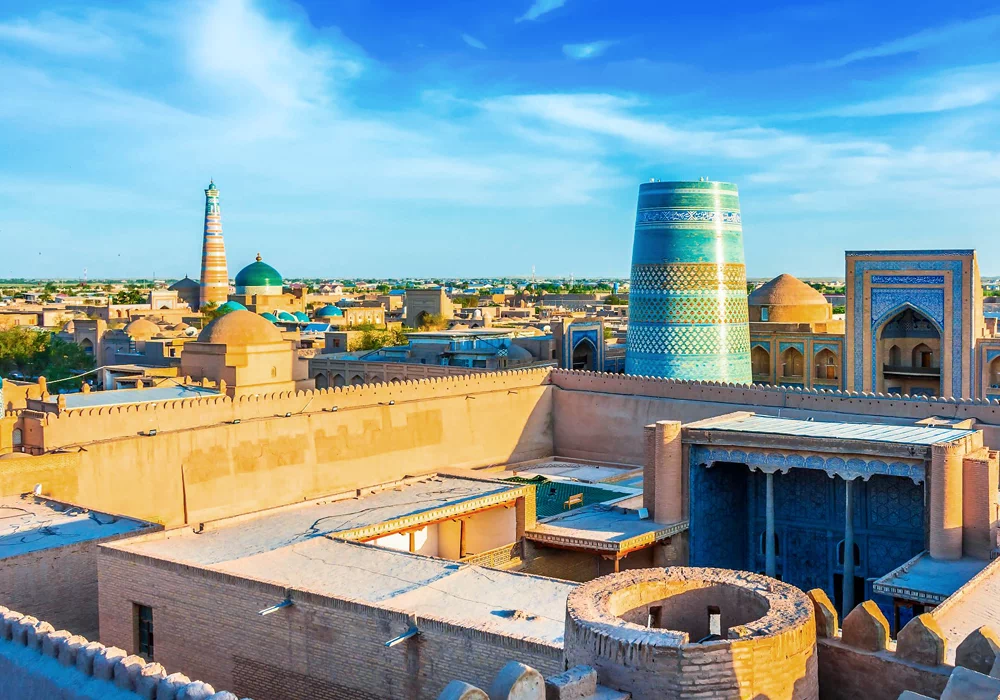
Ichan-Kala (The Historic Walled City)
A completely intact medieval Silk Road city surrounded by two kilometers of undulating mud-brick walls, preserving over fifty historic monuments within a living pedestrian realm.
The Hypostyle Forest of 218 Wooden Columns
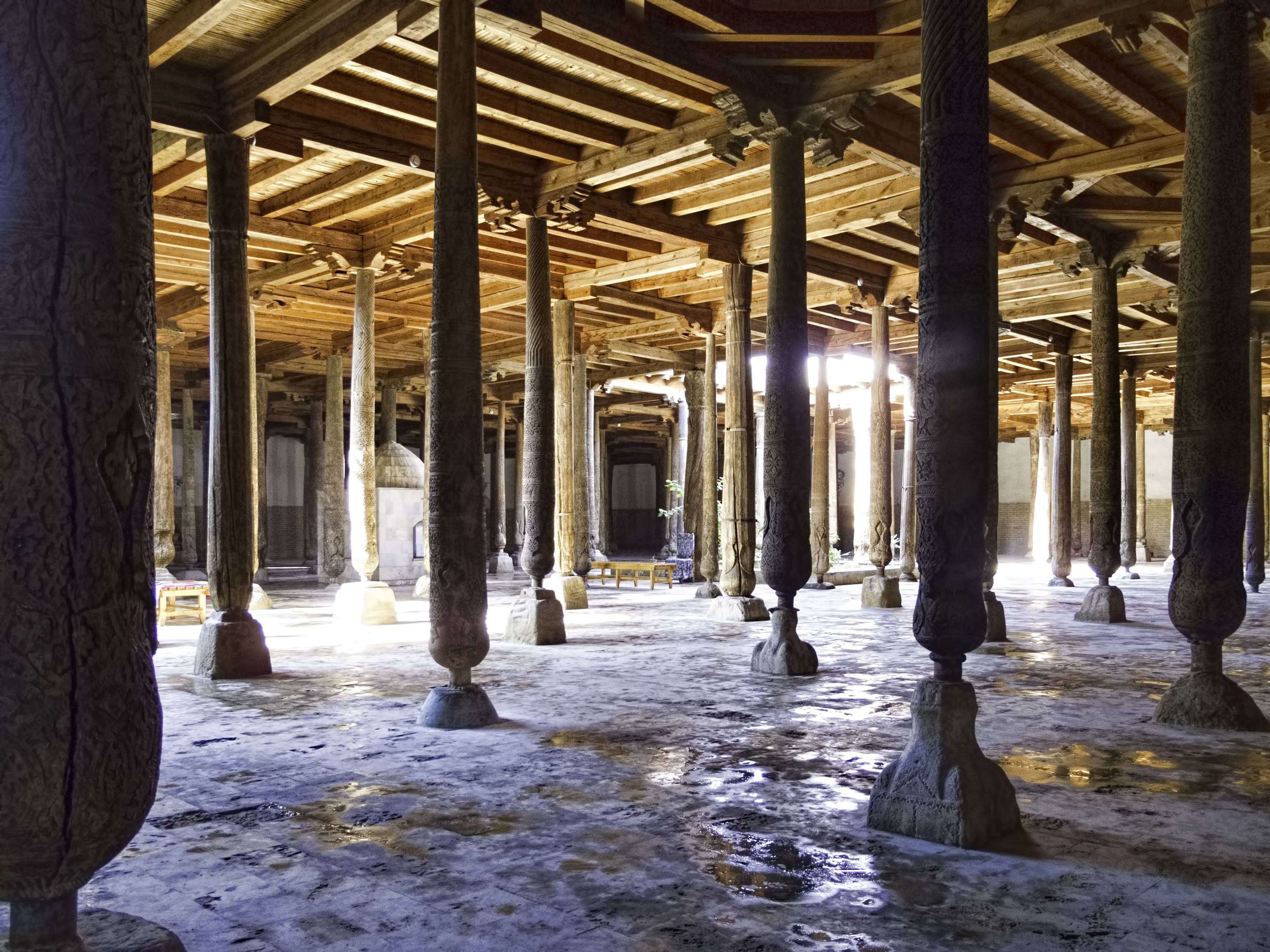
One of the most atmospheric religious spaces in Central Asia: an unadorned single-story hall supported by 218 uniquely carved antique wooden columns dating from the 10th to 18th centuries.
Central east-west thoroughfare of Ichan-Kala
Ancient Hypostyle Friday Mosque (Juma)
Reconstructed 1788 CE on 10th Century foundations
Abdurakhman Mehtar (Reconstruction patron)
Congregational Friday worship for the entire adult male populace
1 – 1.5 hours
Khiva’s Friday Mosque is unlike any other in Uzbekistan. Instead of towering domes and bright blue tiles, it is an archaic flat-roofed hypostyle hall measuring 55 by 46 meters, supported by a tranquil forest of 218 hand-carved wooden pillars that filter shafts of sunlight through open roof light wells.
First mentioned by 10th-century Arab geographer al-Maqdisi. The current hall was rebuilt in 1788, incorporating precious antique columns salvaged from earlier ruined medieval mosques and palaces.
Rebuilt by Abdurakhman Mehtar, a royal official, following ancient Central Asian wooden architecture traditions that date back to pre-Islamic Sogdian columned halls.
The city's principal gathering place for Friday communal prayers, state proclamations, and quiet Quranic recitations in a naturally climate-controlled environment.
An engaging narrative detailing how this monument evolved across Khorezm's golden ages, desert trade conflicts, and modern preservation.
Twenty-one of the columns date back to the 10th to 14th centuries, identifiable by their archaic Kufic inscriptions, bulbous jug-shaped bases, and intricate deeply undercut geometric patterns. Each column was donated by a different wealthy patron or master woodcarver across several centuries.
Features you can see with your own eyes: carved elm columns, majolica friezes, adobe brick bonds, and acoustic domes.
The hall has no arches or vaults: a flat ceiling rests directly on the carved elm and walnut beams. Two square skylights (light wells) in the roof allow natural light to illuminate the cool interior and provide passive airflow. The acoustics are so superb that a whisper near the mihrab carries across the wooden forest.
Carefully selected activities genuinely relevant to this monument or quarter.
Search for the oldest columns from the 10th century, identifiable by archaic Kufic scripts and floral bases.
Experience the profound hush and acoustic resonance inside the wood-pillared sanctuary.
Capture dramatic beams of sunlight cutting through roof lanterns into the shaded interior.
Core educational takeaways that bring Khiva's Silk Road legacy into sharp perspective.
How ancient carvers treated regional elm (karagach) with sheep fat to preserve wood against rot for ten centuries.
A direct continuation of the earliest Arabian mosques (like the Prophet's Mosque in Medina) using wood instead of stone.
Courtyard teahouses, woodcarving studios, and quiet residential lanes right around this site.
Immediately adjacent stands the Juma Minaret, which can be climbed via a dark internal winding staircase for those seeking a vertical thrill.
Explore other walled landmarks and quarters connected with this site's history or walking circuit.
Historic City & WallsA completely intact medieval Silk Road city surrounded by two kilometers of undulating mud-brick walls, preserving over fifty historic monuments within a living pedestrian realm.
 Historic City & Walls
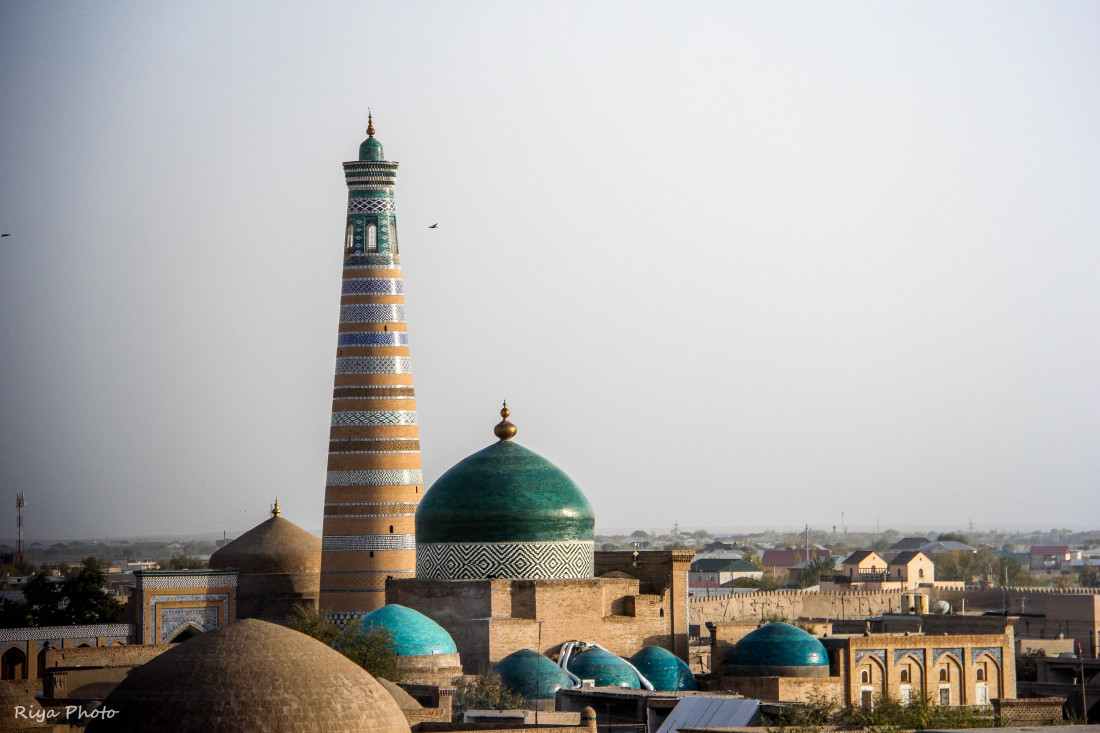
Khiva's tallest vertical monument: a 56-meter-high slender minaret decorated in concentric bands of turquoise, cobalt, and white majolica tiles, paired with a charming asymmetric madrasa.
 Sacred Mosques & Shrines
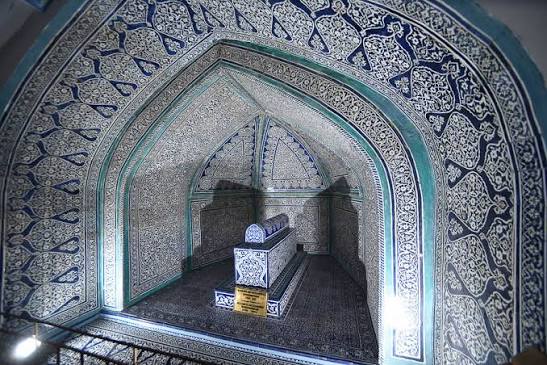
The spiritual heart of Khiva: an exquisite turquoise-domed complex honoring Khiva's patron saint — a legendary wrestler, poet, furrier, and philosopher revered across Central Asia.
Looking for something beyond this monument? Discover royal fortresses, sacred woodcarvings, or Silk Road bazaar alleys.
A completely intact medieval Silk Road city surrounded by two kilometers of undulating mud-brick walls, preserving over fifty historic monuments within a living pedestrian realm.
Khiva’s most iconic and photogenic landmark: a colossal, truncated minaret completely wrapped in gleaming azure, turquoise, and white ceramic tilework.
.jpg)
Experience Ichan-Kala, royal desert palaces, and ancient Silk Road trading chambers with expert Khorezm cultural guides and seamless logistics.