
 Sacred Mosques & Shrines
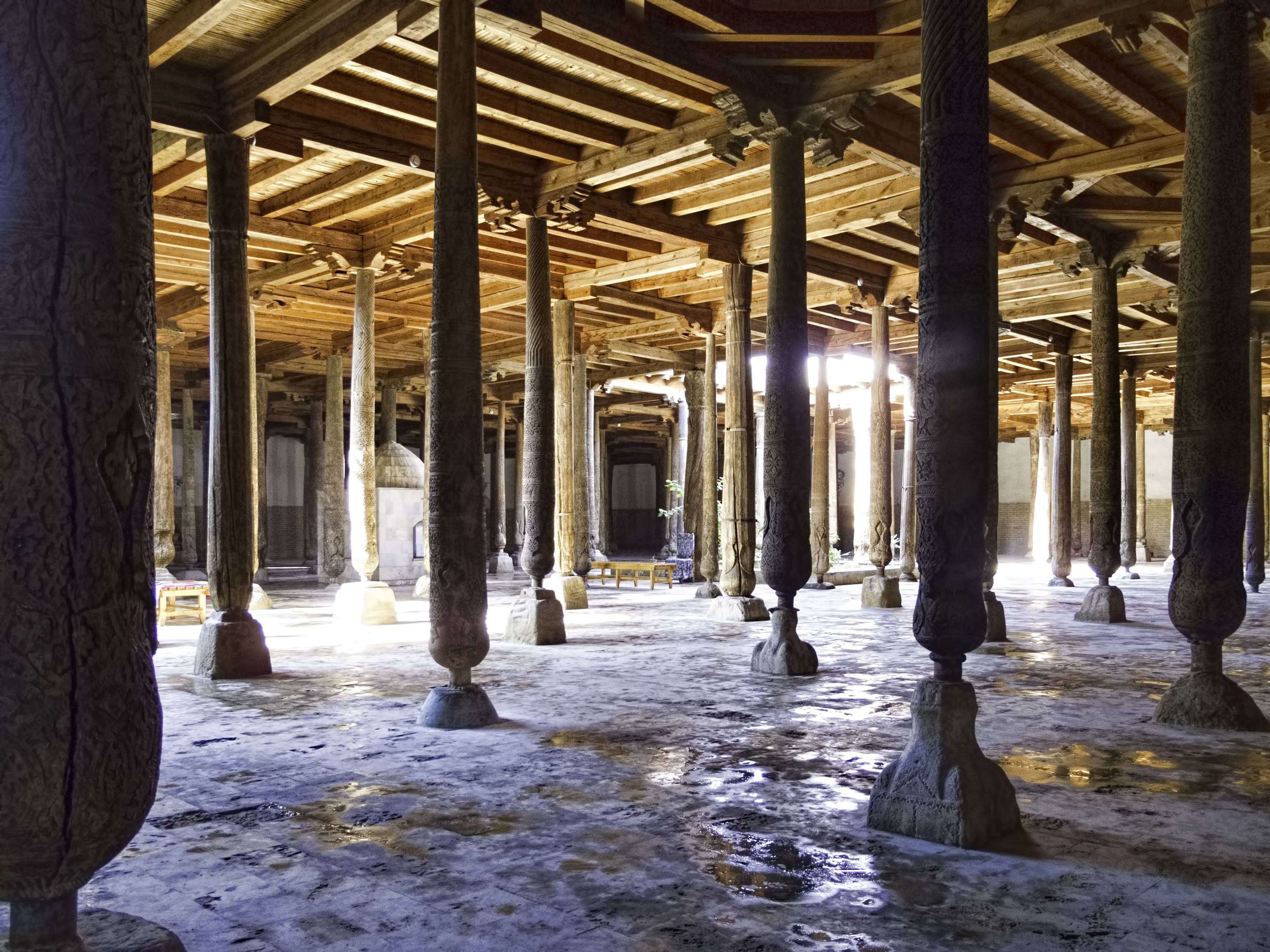
Juma Mosque (Friday Mosque)
One of the most atmospheric religious spaces in Central Asia: an unadorned single-story hall supported by 218 uniquely carved antique wooden columns dating from the 10th to 18th centuries.
The Sacred Turquoise Sanctuary
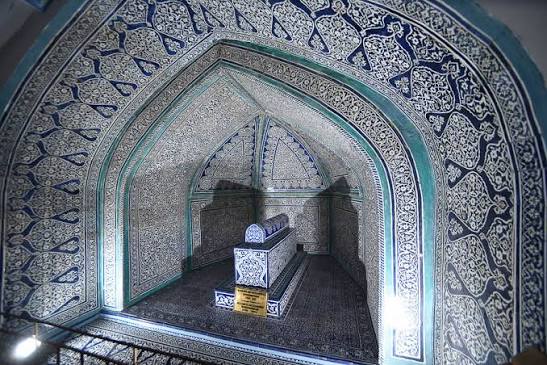
The spiritual heart of Khiva: an exquisite turquoise-domed complex honoring Khiva's patron saint — a legendary wrestler, poet, furrier, and philosopher revered across Central Asia.
South of Juma Mosque
Sacred Mausoleum
1326 (tomb) / expanded 1810 – 1835 CE
Devotees of Pahlavon Mahmud & Muhammad Rahim Khan I
Tomb of the patron saint; later dynastic burial vault for the Khans
1 hour
The most sacred religious destination in Khiva. Crowned by a gigantic turquoise dome, this peaceful complex enshrines the tomb of Pahlavon Mahmud (1247–1326), a folk hero who was simultaneously undefeated wrestling champion, Sufi philosopher, and master maker of fur hats.
Originally a modest mudbrick workshop and burial in 1326. In 1810, Muhammad Rahim Khan I transformed the shrine into a magnificent dynastic mausoleum, adding burial chambers for royal family members.
Expanded by the Kungrat Khans to associate their royal dynasty with the immense popular love and spiritual baraka (blessing) of Khiva’s most beloved saint.
A revered pilgrimage sanctuary (Ziyarat) where locals and travelers come to offer quiet prayers, seek healing at the holy courtyard well, and honor a man who used his physical prowess to ransom and free hundreds of enslaved captives.
An engaging narrative detailing how this monument evolved across Khorezm's golden ages, desert trade conflicts, and modern preservation.
Legend recounts that the Sultan of India, impressed by Pahlavon Mahmud's victory in a wrestling bout, promised to grant any request. Pahlavon asked only for the freedom of as many of his enslaved countrymen as could fit inside a single bullock hide. He then cut the hide into a single paper-thin spiral leather cord that encircled hundreds of prisoners, winning their freedom.
Features you can see with your own eyes: carved elm columns, majolica friezes, adobe brick bonds, and acoustic domes.
The interior is an overwhelming visual feast: every inch of the vaulted walls, domes, and cenotaphs is encrusted with brilliant blue-and-white tiles painted with Persian poetry written by Pahlavon Mahmud himself. Carved wooden doors and filigree metal screens are among the finest in Uzbekistan.
Carefully selected activities genuinely relevant to this monument or quarter.
Experience the tranquil reverence of local pilgrims whispering prayers beside the tomb.
Notice the calligraphic inscriptions around the dome recording Pahlavon's philosophical poetry.
Drink from the sweet water of the courtyard well, long believed to possess healing properties.
Core educational takeaways that bring Khiva's Silk Road legacy into sharp perspective.
The Central Asian tradition combining martial strength, physical discipline, and profound compassion for the weak.
How Central Asian rulers legitimized their political authority by resting beside respected spiritual ascetics.
Courtyard teahouses, woodcarving studios, and quiet residential lanes right around this site.
Located in the quiet spiritual core of Ichan-Kala, shaded by grape vines with quiet courtyard teahouses nearby.
Explore other walled landmarks and quarters connected with this site's history or walking circuit.
Sacred Mosques & ShrinesOne of the most atmospheric religious spaces in Central Asia: an unadorned single-story hall supported by 218 uniquely carved antique wooden columns dating from the 10th to 18th centuries.
 Historic City & Walls
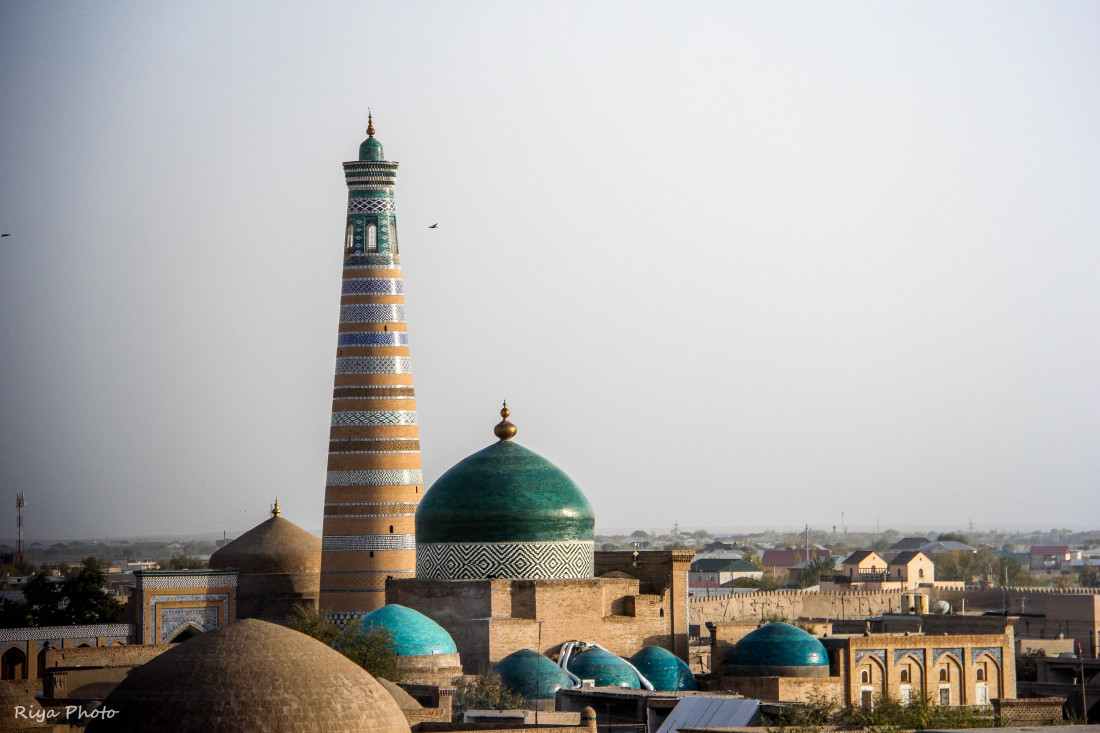
Khiva's tallest vertical monument: a 56-meter-high slender minaret decorated in concentric bands of turquoise, cobalt, and white majolica tiles, paired with a charming asymmetric madrasa.
 Royal Palaces & Fortresses
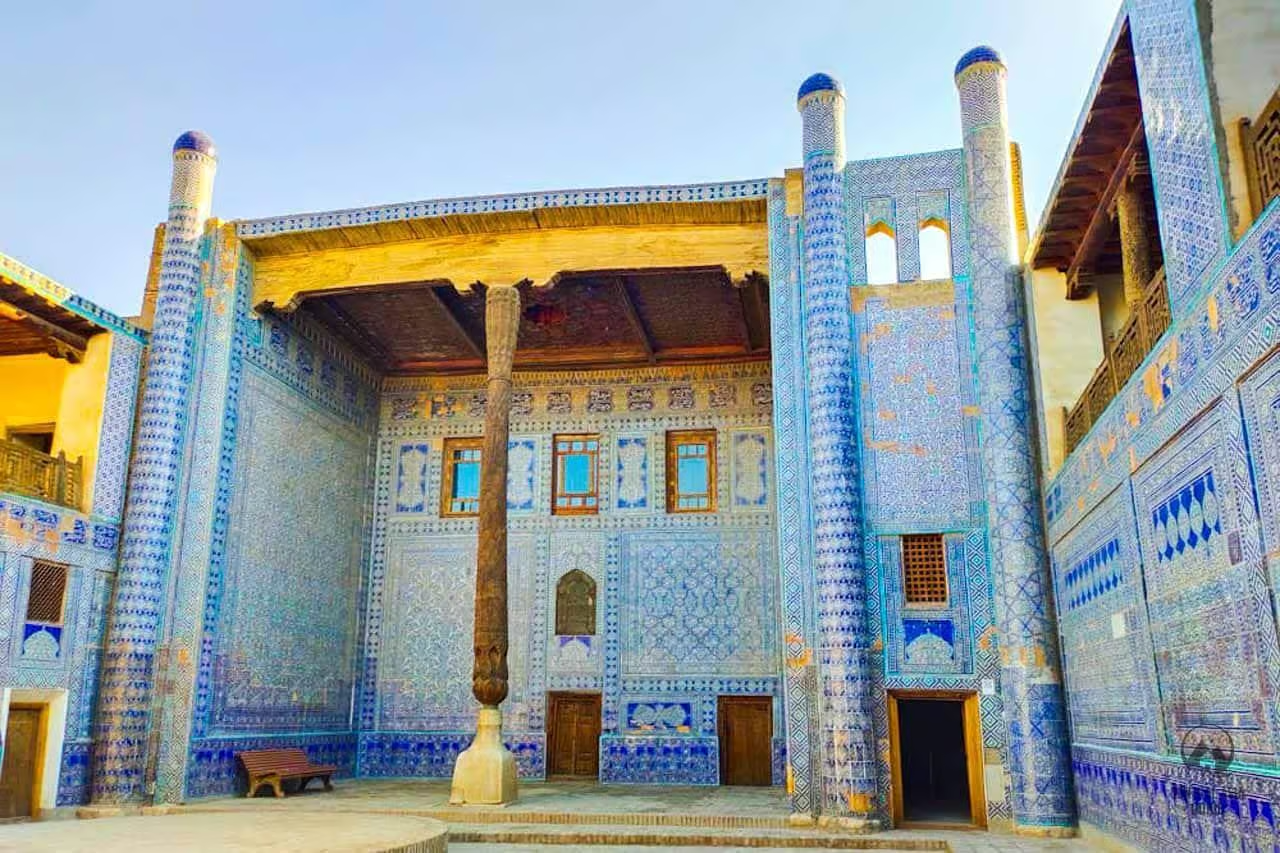
An opulent 19th-century royal palace containing over 150 rooms and three grand courtyards, smothered in the most dense, hypnotic cobalt and turquoise majolica tiles in Uzbekistan.
Looking for something beyond this monument? Discover royal fortresses, sacred woodcarvings, or Silk Road bazaar alleys.
A completely intact medieval Silk Road city surrounded by two kilometers of undulating mud-brick walls, preserving over fifty historic monuments within a living pedestrian realm.
Khiva’s most iconic and photogenic landmark: a colossal, truncated minaret completely wrapped in gleaming azure, turquoise, and white ceramic tilework.
.jpg)
Experience Ichan-Kala, royal desert palaces, and ancient Silk Road trading chambers with expert Khorezm cultural guides and seamless logistics.