
 Timurid Samarkand
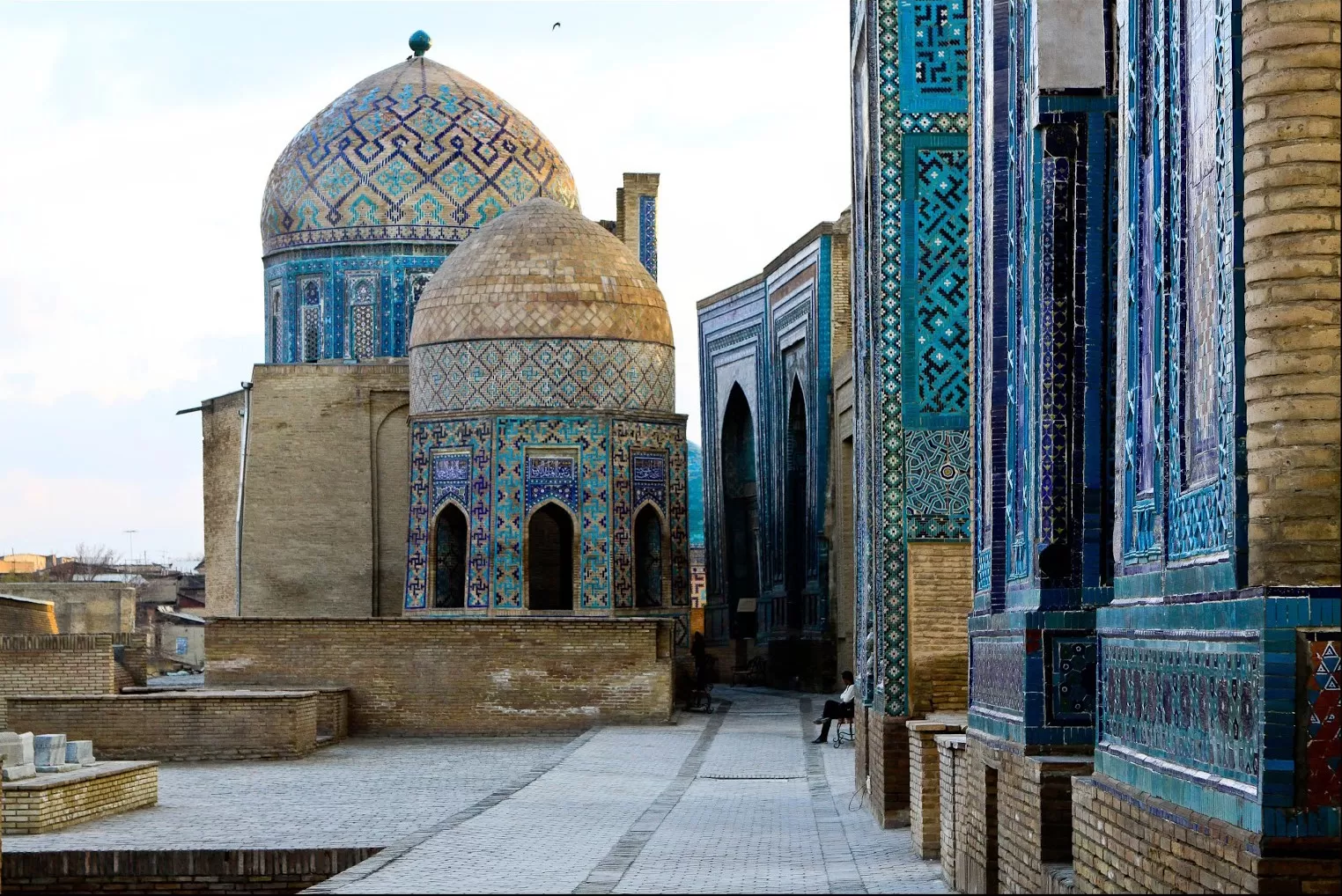
Shah-i-Zinda
A sacred hillside necropolis boasting the most exquisite cobalt, turquoise, and lapis lazuli tilework in the entire Islamic world.
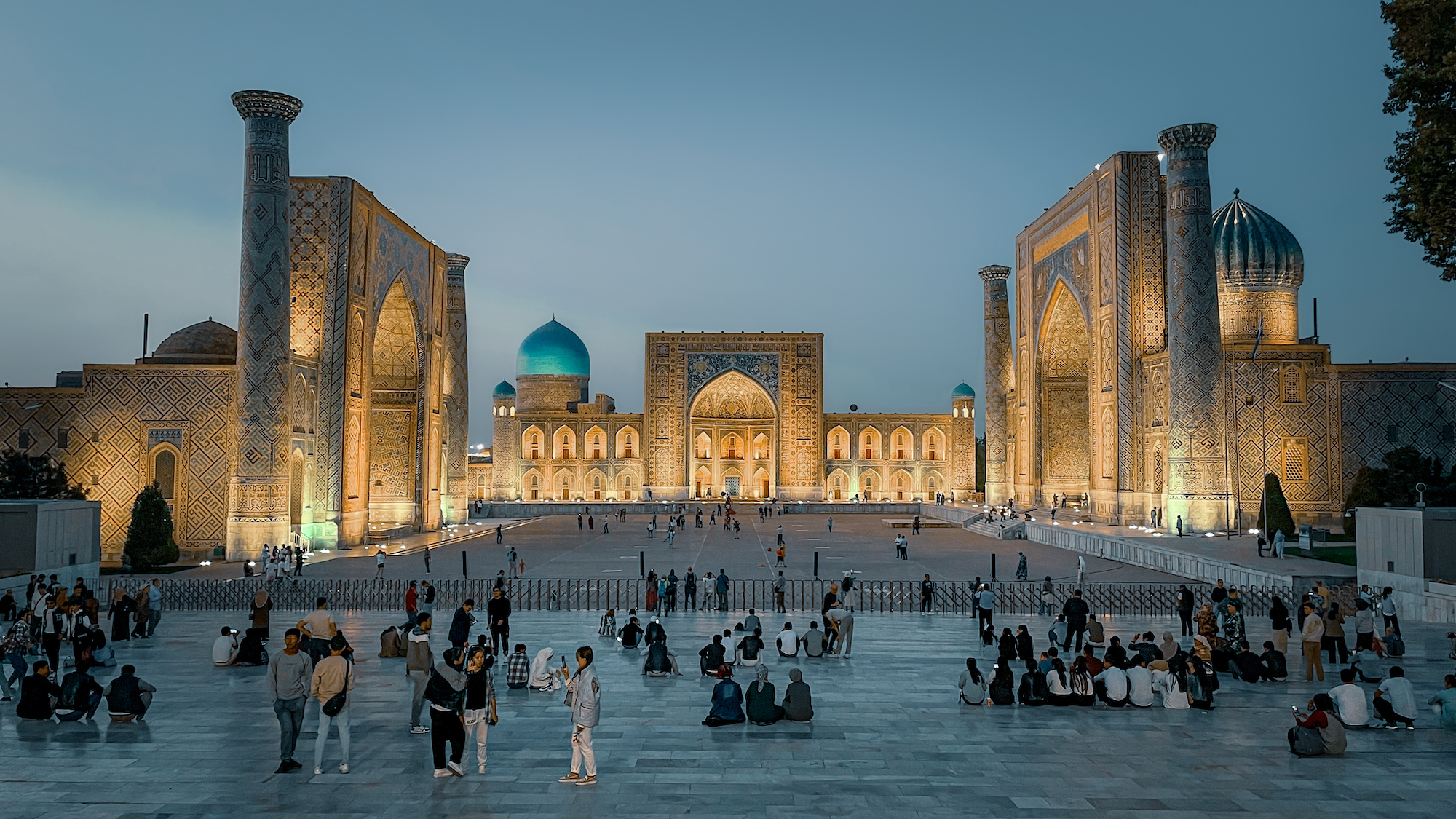
The Monumental Heart of the Silk Road
One of the world’s most breathtaking public squares, framed by three monumental tiled madrasas that established Samarkand as a global center of science and faith.
Central Samarkand (Registon Street)
Architectural Ensemble
1417 – 1660 CE
Ulugh Beg
Higher education
2.5 – 3.5 hours
Registan Square is the defining architectural symbol of Samarkand and Central Asia. It is a grand public forum enclosed on three sides by towering, gorgeously tiled madrasas (Islamic colleges): the Ulugh Beg Madrasa, the Sher-Dor Madrasa, and the Tilya-Kori Madrasa.
The ensemble evolved across more than two centuries. Ulugh Beg constructed the western madrasa between 1417 and 1420. Two centuries later, governor Yalangtush Bakhodur commissioned the Sher-Dor (1619–1636) and the Tilya-Kori (1646–1660) to complete the harmonious tripartite plaza.
Initiated by Sultan Ulugh Beg, the intellectual ruler of the Timurid dynasty, to transform Samarkand into a beacon of mathematics, astronomy, and theology. Later rulers expanded the square as a monumental statement of civic prosperity and Islamic scholarship.
During its golden era, Registan was not merely an open plaza: it served as an active university campus where hundreds of scholars lived in student dormitories (hujras), attended lectures on mathematics and philosophy, and heard royal proclamations announced in the public forum.
An engaging chronological story free from dry textbook jargon, focusing on how this place influenced the Silk Road.
Originally a sandy crossroads (Registan translates as 'sandy place') where merchants gathered to trade Silk Road wares, the site was transformed by Timur and his successors into an imperial showpiece. In the 15th century, Ulugh Beg's madrasa housed top astronomers and thinkers. Despite earthquakes and regional turmoil over centuries, extensive 20th-century conservation restored its azure domes and gilded ceilings to their original splendor.
What to notice and look for when standing before this site.
The square is renowned for geometric perfection: soaring pishtaqs (entrance portals), fluted azure domes, and intricate majolica tilework. Notice the Sher-Dor Madrasa's façade depicting golden lions pursuing deer toward rising suns with human faces — a striking departure from strict Islamic geometric traditions. Inside Tilya-Kori, the interior dome is coated in brilliant gold leaf (kundal technique) creating an illusion of endless starry heavens.
Activities and sensory experiences specifically relevant to this site.
Capture the façade during blue hour when architectural illumination highlights azure tiles.
Explore the secluded student cells and artisan craft workshops within each madrasa.
Learn about the complex geometry, star maps, and Quranic calligraphy woven into the facades.
Watch the colorful sound-and-light projection narrating Samarkand's multi-millennial history.
The historical, scientific, or cultural takeaways that enrich your understanding of Central Asia.
How medieval engineers solved seismic resilience through interlocking brick vaults and tapered minarets.
The pivotal role madrasas played in teaching secular sciences like geometry and astronomy alongside theology.
Deciphering the meaning of stars, solar faces, and Persian poetic inscriptions.
Recommendations for teahouses, bakeries, artisan workshops, and walks in the surrounding neighborhood.
Just north of Registan lies the pedestrian Tashkent Street connecting directly to Bibi-Khanym Mosque and Siab Bazaar. Stop for traditional Samarkand tea and samsa at the tea pavilions bordering the gardens.
Explore other regional landmarks that share historical or geographic connections with this site.
Timurid SamarkandA sacred hillside necropolis boasting the most exquisite cobalt, turquoise, and lapis lazuli tilework in the entire Islamic world.
 Timurid Samarkand
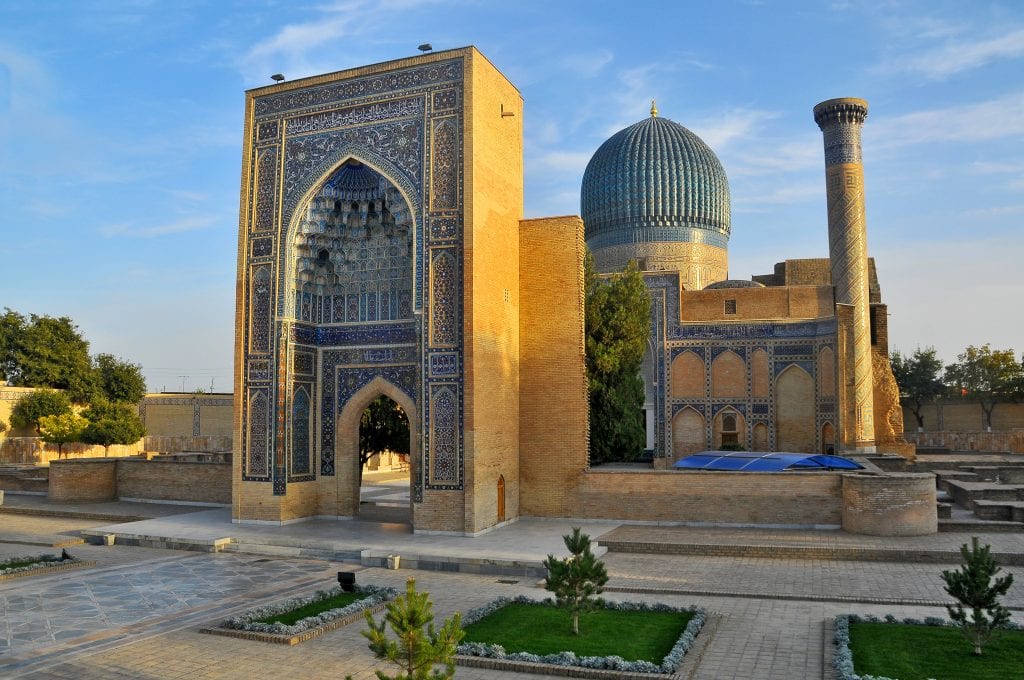
The magnificent fluted turquoise dome beneath which lies the jade cenotaph of Amir Timur (Tamerlane), the founder of the Timurid Empire.
 Timurid Samarkand
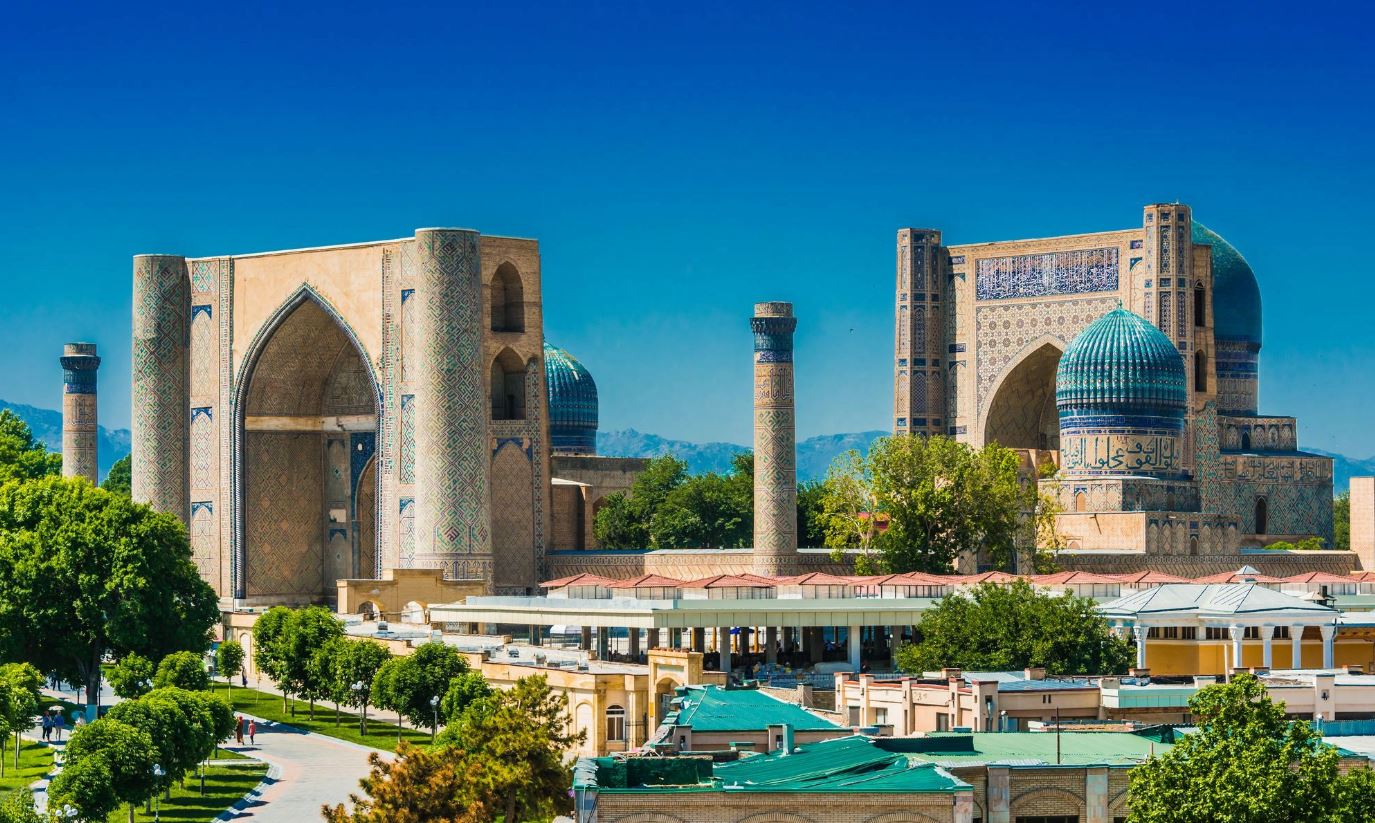
One of the largest and most ambitious religious buildings of the medieval world, built by Timur to rival the heavens.
Looking for something beyond this monument? Discover a completely different historical or natural dimension of the region.
The birthplace of Samarkand: an undulating 200-hectare archaeological hill preserving 2,500 years of Sogdian, Persian, and Hellenistic urban history.
A tranquil riverside mill where the ancient art of making silk-smooth, archival mulberry paper is kept alive using water-powered wooden hammers.
.jpg)
Include this landmark in a customized private or small-group journey combining ancient cities with Nuratau Mountain homestays.