
 Timurid Samarkand
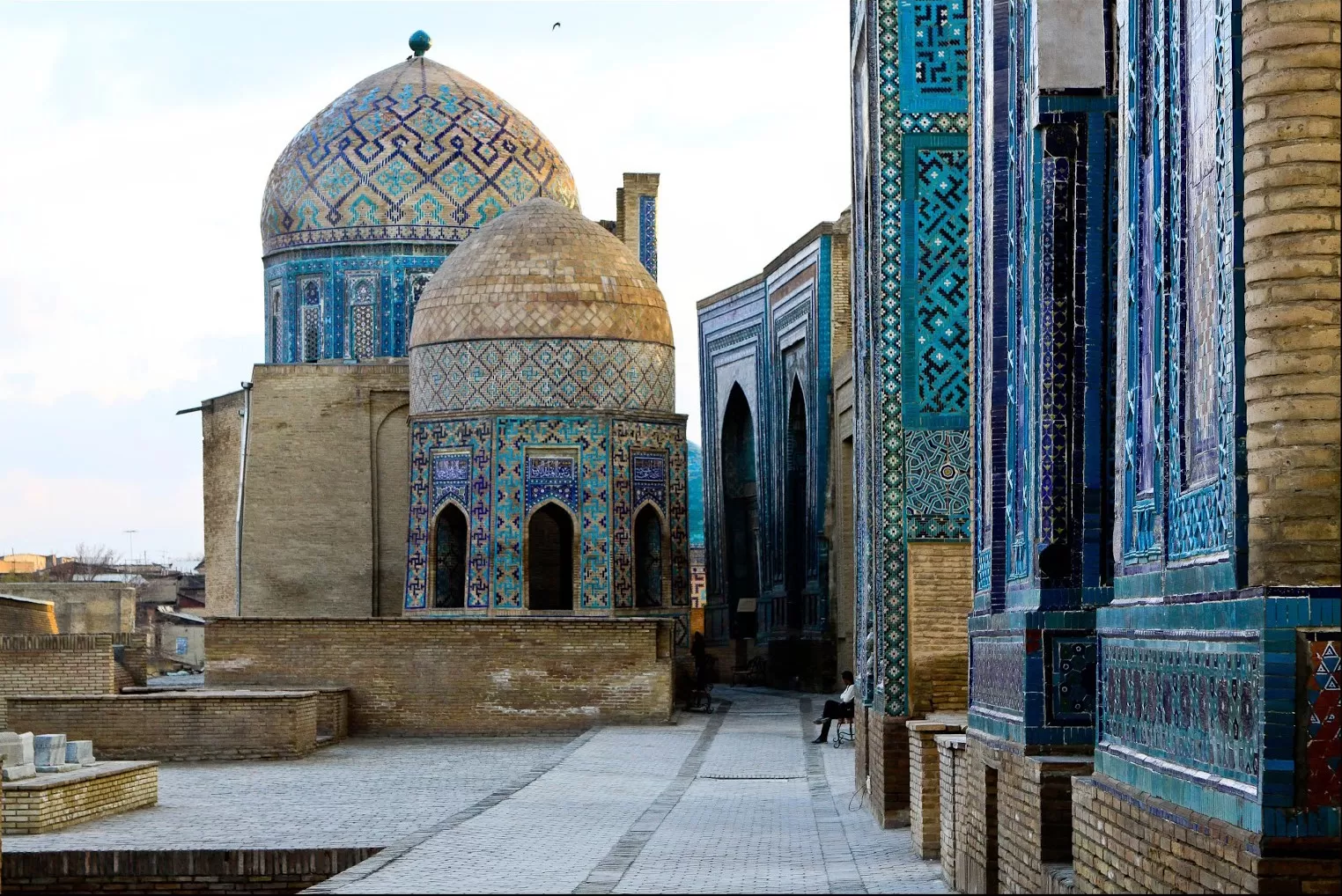
Shah-i-Zinda
A sacred hillside necropolis boasting the most exquisite cobalt, turquoise, and lapis lazuli tilework in the entire Islamic world.
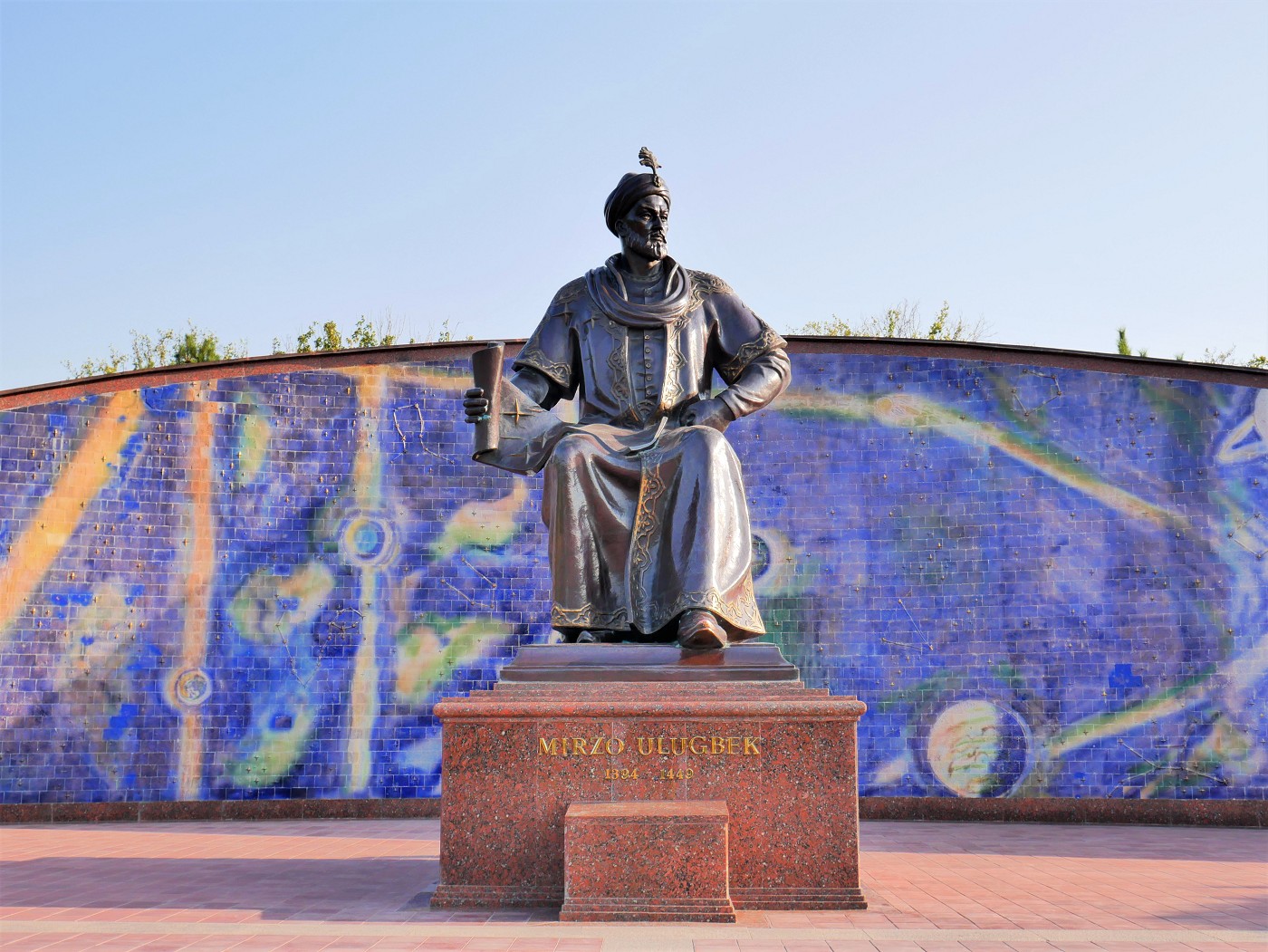
A Masterpiece of Medieval Astronomy
The remnants of a colossal 15th-century astronomical sextant that calculated the length of the stellar year with near-atomic precision.
Chupan-Ata hill
Astronomical Research Complex
1424 – 1429 CE
Sultan Ulugh Beg (Grandson of Timur)
Planetary tracking
1 – 1.5 hours
A world-renowned scientific monument consisting of the subterranean curved trench of a monumental 63-meter meridian sextant (fakhri sextant), alongside a dedicated museum detailing Central Asia’s golden age of science.
Erected on a hill between 1424 and 1429 as a three-storey circular building over 30 meters high, equipped with the most accurate astronomical measuring instruments known to the medieval world.
Ulugh Beg, a mathematician-king who famously remarked that 'religions disperse like mist, but sciences remain forever.' He gathered the greatest Islamic astronomers (including al-Kashi and Qadi Zada) to establish empirical star catalogues.
To produce the 'Zij-i Sultani' — a star catalogue calculating the positions of 1,018 stars and determining the tropical year as 365 days, 5 hours, 49 minutes, and 15 seconds (differing from modern atomic measurement by only 25 seconds).
An engaging chronological story free from dry textbook jargon, focusing on how this place influenced the Silk Road.
After Ulugh Beg was assassinated in 1449 by religious fanatics, the observatory was abandoned and dismantled for building stones. Its exact underground location remained a mystery until 1908, when Russian archaeologist Vasily Vyatkin discovered the curved marble track carved into the bedrock.
What to notice and look for when standing before this site.
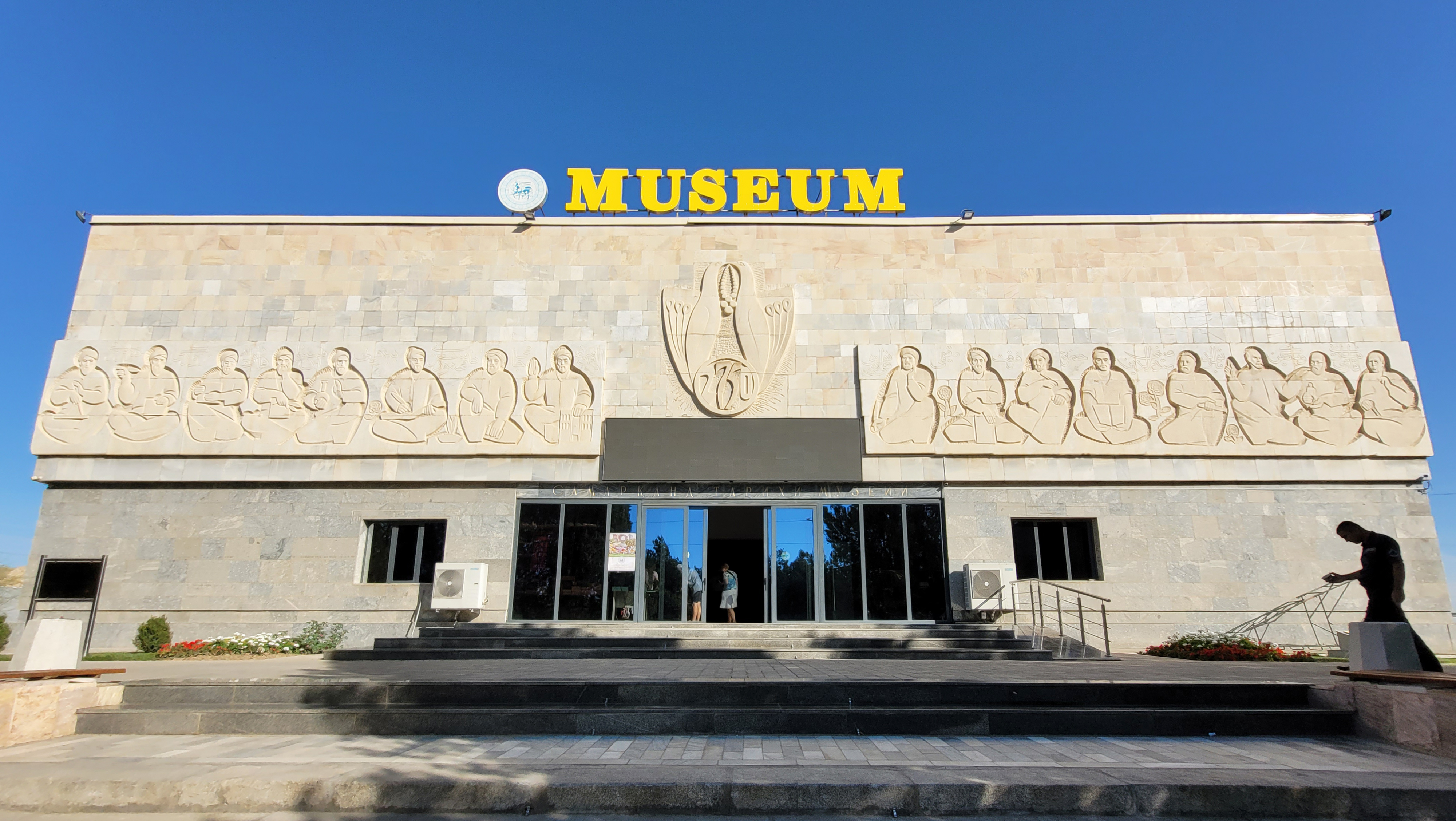
The surviving fragment is the lower trench cut into limestone rock, preserving two curved marble rails inscribed with minute degree markings. The adjoining museum displays medieval astrolabes, celestial globes, and European star maps that acknowledged Ulugh Beg alongside Copernicus and Galileo.
Activities and sensory experiences specifically relevant to this site.
Look down into the curved trench where shadows of celestial bodies were plotted with precision.
Discover original manuscripts, celestial charts, and models of the three-tiered observatory.
Enjoy wide views across the Samarkand valley from this tranquil hilltop.
The historical, scientific, or cultural takeaways that enrich your understanding of Central Asia.
How massive scale was used to achieve sub-millimeter angular precision before optical lenses were invented.
How Ulugh Beg's star catalogue traveled to Oxford and Paris, shaping European Renaissance astronomy.
Recommendations for teahouses, bakeries, artisan workshops, and walks in the surrounding neighborhood.
Located just a few minutes drive from Afrasiab Museum. A quiet residential area with shaded garden chaykhanas (teahouses).
Explore other regional landmarks that share historical or geographic connections with this site.
Timurid SamarkandA sacred hillside necropolis boasting the most exquisite cobalt, turquoise, and lapis lazuli tilework in the entire Islamic world.
 Ancient Samarkand
The birthplace of Samarkand: an undulating 200-hectare archaeological hill preserving 2,500 years of Sogdian, Persian, and Hellenistic urban history.
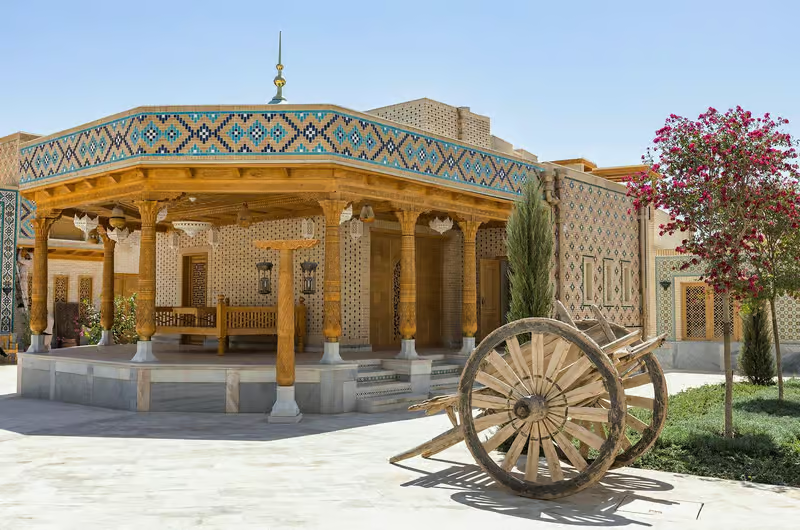 Living Samarkand
A tranquil riverside mill where the ancient art of making silk-smooth, archival mulberry paper is kept alive using water-powered wooden hammers.
Looking for something beyond this monument? Discover a completely different historical or natural dimension of the region.
The birthplace of Samarkand: an undulating 200-hectare archaeological hill preserving 2,500 years of Sogdian, Persian, and Hellenistic urban history.
A tranquil riverside mill where the ancient art of making silk-smooth, archival mulberry paper is kept alive using water-powered wooden hammers.
.jpg)
Include this landmark in a customized private or small-group journey combining ancient cities with Nuratau Mountain homestays.