Chorsu Bazaar
The Living Epicenter of Silk Road Commerce & Local Life
Tashkent's most famous and historic market, operating beneath a monumental turquoise dome with fragrant spice rows, fresh non bread, and vibrant national street food.
Old City Center, Tashkent
Historic Central Asian Bazaar
Trading market for over a millennium; current dome opened 1980
Historic merchants of the Chorsu crossroads; dome designed by Vladimir Azimov
Crossroads commercial trading post on the northern Silk Road branches
2 – 3 hours
What is Chorsu Bazaar?
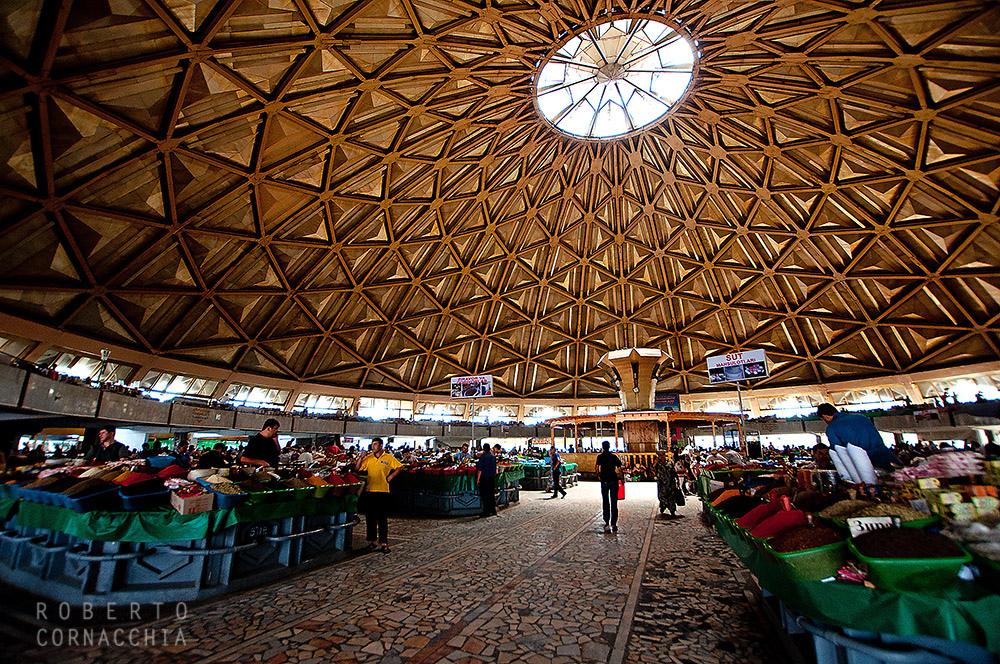
Chorsu Bazaar (from the Persian word meaning 'four ways' or 'crossroads') is one of the oldest and most atmospheric markets in Central Asia. Situated at the historical intersection of trade routes entering Tashkent from the steppe, mountains, and southern oasis cities, it continues to serve as the city's essential grocery hub and living social square. Its centerpiece is a colossal, 70-meter-wide open concrete cupola finished in azure tiles, surrounded by sprawling pavilions dedicated to meat, dairy, spices, bread, nuts, dried fruits, textiles, and traditional crafts.
Chronicles & Story
Even under strict Soviet central planning, Chorsu remained a bastion of authentic private enterprise and Central Asian bazaar culture where haggling, generational family recipes, and direct farmer-to-consumer trading flourished. Today, it remains the ultimate window into everyday Uzbek domestic life: grandmother vendors sample homemade smetana and kurt (dried sour yogurt balls), bakers rhythmically stamp non bread, and the aroma of cumin, coriander, and boiling plov fills the air.
Who Created It and Why?
Rebuilt repeatedly after earthquakes and fires, the modern marketplace was constructed under Uzbek Soviet urban planners led by architect Vladimir Azimov to provide an earthquake-resistant, naturally ventilated trading rotunda capable of sustaining Tashkent's vibrant agricultural commerce in any season.
Established: Trading on this hill has occurred continuously for over a thousand years. During medieval times, caravanserais, bathhouses, and guild stalls crowded the slopes. The current iconic ribbed blue dome was engineered in the late 1970s and officially inaugurated in 1980, blending modernist concrete shell engineering with traditional Central Asian decorative motifs.
Architecture & Landscape Features
The main dome is a striking example of Soviet modernist engineering combined with Oriental decorative tradition. Built as a self-supporting inverted saucer shell, it requires no internal support pillars, creating a vast, column-free circular trading hall. Natural light filters through geometric lattice apertures around the rim, while the exterior is clad in gleaming turquoise majolica tiles that echo historic Samarkand cupolas.
How to Experience Chorsu Like a Local
Chorsu is not merely a shopping venue; it is an immersive sensory theater of Central Asian culinary culture and social interaction.
WHAT TO TASTE
Freshly baked hot Uzbek non from clay tandyrs, spicy horsemeat kazy sausage, lamb shashlik skewers, crispy somsa, and fermented chal/ayran.
WHAT TO BUY
Mountain almonds, dried apricots stuffed with walnuts, golden raisins, whole cumin (zira), saffron threads, and hand-embroidered skullcaps (doppi).
WHAT TO NOTICE
The cheerful call-and-response of vendors, the ornate wooden bread stamps (chekich), and the intricate balance scales calibrated by veteran traders.
HOW THE MARKET WORKS
Organized by dedicated guilds: ground level for dairy, pickled salads, and meats; mezzanine ring for dried fruits, honey, and confectionery; outer alleys for household crafts.
What Can You Do Here?
Sample Street Food in the Food Row
Sit at long communal tables in the outdoor street food alley behind the dome to savor freshly ladled lagman, plov, and sizzling kebabs.
Taste Mountain Dried Fruits & Spices
Engage with friendly vendors on the upper ring who gladly offer samples of sun-dried mountain raisins, dried persimmons, and sweet almonds.
Observe Tandoor Non Bakers
Watch master bakers rapidly slap disks of patterned dough against the curved clay walls of glowing underground ovens.
Browse the Artisan Alleys
Explore the surrounding craft rows featuring handmade cradles (beshik), hand-beaten copper cauldrons, and hand-woven ikat scarves.
What Will You Discover?
The Code of Bazaar Hospitality
Discover how bargaining in Uzbekistan is not an adversarial transaction, but a respectful social conversation rooted in Silk Road courtesy.
Central Asian Agricultural Bounty
Learn how the unique microclimates of Uzbekistan's river valleys yield extraordinary sweetness in melons, pomegranates, and dried fruits.
Tradition Preserved in Modern Structures
See how 20th-century concrete architecture was adapted to sustain thousand-year-old marketplace customs.
Nearby Experiences
Right outside the market gates is the historic Kukeldash Madrasa (16th century) and the Juma Mosque of Tashkent. The Chorsu Metro Station, located directly below, provides immediate underground transport across the city.
Continue Your Journey Through Uzbekistan
Tashkent connects directly by fast Afrosiyob rail to Samarkand, Bukhara, and Khiva.
.jpg) Timurid Capital
Timurid CapitalSamarkand
Turquoise double-domes, astronomical observatories, and vibrant paper mills.
.jpg) Spiritual Oasis
Spiritual OasisBukhara
Medieval madrasas, trading domes, and quiet shaded courtyards.
.jpg) Desert Citadel
Desert CitadelKhiva
Walled mudbrick open-air museum glowing amber at desert sunset.
Plan Your Visit to Chorsu Bazaar
Our local travel specialists craft personalized Uzbekistan itineraries connecting Tashkent with mountain escapes and Silk Road cities.