
State Museum of Applied Arts of Uzbekistan
A Dazzling Treasury of Master Suzanis, Ceramics & Wood Carving
A magnificent 19th-century diplomat's mansion preserving over 7,000 works of traditional Uzbek craftsmanship, from radiant gold embroidery to Rishtan ceramics.
Rakatboshi Street, Yakkasaray District, Tashkent
Decorative, Applied & Traditional Arts Museum
Mansion constructed in late 1890s; museum founded 1927
Built by Russian diplomat Alexander Polovtsev with master Uzbek craftsmen
Private residence and salon celebrating Central Asian decorative architectural crafts
1.5 – 2 hours
What is State Museum of Applied Arts of Uzbekistan?
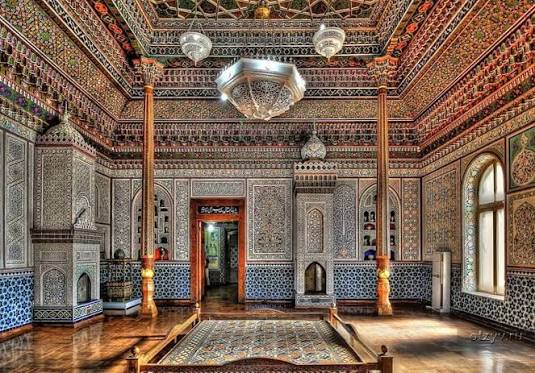
The State Museum of Applied Arts is one of Tashkent's most intimate and visually enchanting museums. Housed within the former private residence of late-19th-century tsarist diplomat Alexander Polovtsev, the mansion itself is an extraordinary masterwork of traditional Uzbek decorative art. Its halls preserve more than 7,000 priceless artifacts spanning the early 19th century to the modern day, including silk suzani tapestries, Gijduvan and Rishtan glazed ceramics, chased copper vessels, gold-embroidered robes, carved walnut furniture, and traditional musical instruments.
Chronicles & Story
During the early 20th century, Western industrialization threatened many ancestral Central Asian handicraft guilds. The foundation of this museum created a sanctuary where historical patterns, natural vegetable dye recipes, and ancestral woodworking techniques were preserved and cataloged. Today, it remains an indispensable source of inspiration for modern fashion designers, textile artists, and travelers seeking to understand the symbolic vocabulary of Uzbek ornament.
Who Created It and Why?
Decorated by master artisans including Usto Shirin Muradov (renowned for intricate ganch plaster carving) and Usto Tashpulat Arslankulov (master of painted wood ceilings). Their goal was to create an opulent living showroom demonstrating the pinnacle of regional decorative technique.
Established: Construction of the mansion began in the late 1890s under the patronage of Polovtsev, who was an ardent admirer of Central Asian decorative arts. He hired the most skilled master craftsmen (usto) from Tashkent, Samarkand, Bukhara, Khiva, and the Fergana Valley. The building was nationalized after 1917 and formally opened as an applied arts museum in 1927.
Architecture & Landscape Features
The central reception hall is breathtaking: walls are coated in multiple layers of ganch (carved gypsum plaster over mirrored glass) cut into micro-fine geometric and arabesque lace. Overhead, high timber ceilings (kundal) are hand-painted with mineral pigments and gold leaf. Carved cedar and walnut doors swing on handmade wooden pivots without metal hinges, revealing rooms glowing with stained glass and carved niches.
Uzbek Crafts Under One Roof
The museum's 7,000-piece permanent collection is systematically organized by traditional handicraft guilds and regional schools.
Suzani Wall Hangings
Silk-embroidered bridal tapestries from Nurata, Bukhara, and Shakhrisabz featuring solar disks, pomegranate blossoms, and protective talismans.
Ceramic Schools
Comparing the earthy lead-glazed wares of Gijduvan with the luminous turquoise and ultramarine alkalinic glazes of Rishtan.
Bukhara Gold Embroidery (Zarduzi)
Ceremonial royal robes (chapan) embroidered with real gold and silver bullion thread worn by the Emirs of Bukhara.
Carved Walnut & Musical Instruments
Carved Quran bookstands (lawh) carved from a single piece of wood, alongside pear-shaped dutar and rubab lutes with mother-of-pearl inlay.
What Can You Do Here?
Examine the Ganch Plaster Lace
Look closely at the layered relief plaster in the main salon to marvel at the microscopic precision of the floral carvings.
Decode Suzani Symbols
Learn how the pomegranate motif represents fertility, chili peppers ward off the evil eye, and almonds symbolize prosperity.
Visit the Museum Artisan Shop
Purchase certified authentic handmade ceramics, hand-dyed silk scarves, and miniature paintings directly from accredited masters.
Photograph Painted Timber Ceilings
Capture the vibrant red, blue, and gold geometric rosettes adorning the high wooden beams.
What Will You Discover?
The Cultural Language of Ornament
Discover how every flower, curl, and geometric polygon in Uzbek textiles carries deep symbolic meaning rooted in ancient cosmology.
Regional Craft Distinctiveness
Learn to instantly distinguish between a Fergana Valley suzani, a Samarkand ceramic bowl, and a Khivan carved pillar.
Sustainable Craft Revival
Understand how contemporary Uzbek master artisans continue to practice natural walnut-husk, madder-root, and indigo dyeing.
Nearby Experiences
Nestled inside a quiet residential mahalla, the museum provides a peaceful escape from busy city avenues. A 10-minute taxi ride connects you back to Amir Timur Square or the Kosmonavtlar metro station.
Continue Your Journey Through Uzbekistan
Tashkent connects directly by fast Afrosiyob rail to Samarkand, Bukhara, and Khiva.
.jpg) Timurid Capital
Timurid CapitalSamarkand
Turquoise double-domes, astronomical observatories, and vibrant paper mills.
.jpg) Spiritual Oasis
Spiritual OasisBukhara
Medieval madrasas, trading domes, and quiet shaded courtyards.
.jpg) Desert Citadel
Desert CitadelKhiva
Walled mudbrick open-air museum glowing amber at desert sunset.
Plan Your Visit to State Museum of Applied Arts of Uzbekistan
Our local travel specialists craft personalized Uzbekistan itineraries connecting Tashkent with mountain escapes and Silk Road cities.